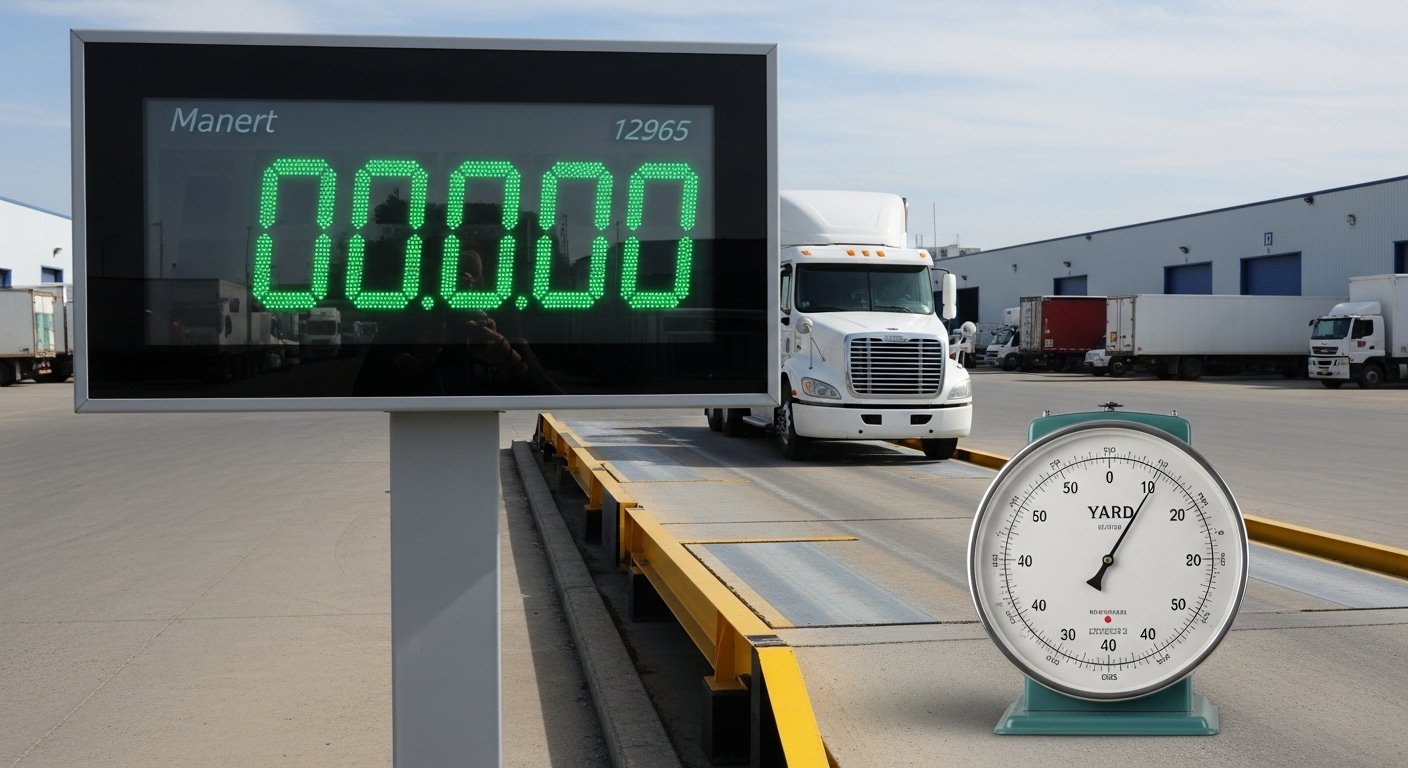
Weight is everything in scrap. You get paid per kilogram. Every kilogram that disappears between your yard and the buyer’s slip is money you worked for and never received.
And it disappears more often than most sellers realize.
This is exactly where weighing becomes the most important – and most manipulated – part of any scrap deal.
The Two Weighing Systems You’ll Encounter
Before diving into which one protects you, know what you’re actually dealing with.
| Weighing Type | What It Is | Where You’ll Find It |
|---|---|---|
| Certified Weighbridge | Government-verified truck scale, calibrated under Legal Metrology Act | Toll plazas, APMC yards, standalone weigh stations |
| Buyer’s Yard Scale | Private scale inside the buyer’s premises | Scrap yards, induction furnaces, processing units |
| Platform / Floor Scale | Smaller scale for partial loads | Small kabadi shops, household scrap |
| Crane Scale | Hanging scale measuring grab loads | Large yards doing bulk material handling |
The one that protects you is always the certified weighbridge. The one that doesn’t – almost never does – is the buyer’s in-house yard scale.
What a Certified Weighbridge Actually Is
A proper weighbridge is a full-length platform scale – typically 18 to 20 metres long – built into the ground. The entire loaded truck drives onto it. The weight gets recorded digitally and printed on a stamped slip.
In India, weighbridges fall under the Legal Metrology Act, 2009 and the Legal Metrology (General) Rules, 2011. Every certified weighbridge must be verified by a Legal Metrology officer and re-calibrated every 12 months. Calibration uses standard certified weights – usually 10 to 20 tonne test loads – to check accuracy at multiple load ranges.
Penalties for operating an unverified weighbridge: up to ₹25,000 fine or imprisonment under Section 25 of the Act. That’s how seriously the law treats weight fraud.
Accuracy on a certified weighbridge: within a few kilograms on loads of 20+ tonnes. That’s the standard.
What Actually Happens on a Buyer’s Yard Scale
Here’s the part nobody puts in writing.
A buyer’s in-house scale is a private instrument. It gets calibrated when the buyer decides to calibrate it. Nobody from the government is checking it on a schedule. Nobody is stamping it.
And when a scale consistently reads 150 – 300 kg low on a 20-tonne load, the buyer knows about it. Sometimes it’s negligence. Sometimes it isn’t.
A real case from Rajkot, January 2026: a scrap trader filed a police complaint after discovering his supplier’s empty vehicles were consistently weighing 250 – 300 kg less than their actual tare weight on handwritten slips – resulting in a ₹28.69 lakh loss over 18 months.
In Pune, 2025: two scrap dealers were arrested after attaching a remote-controlled device to a company’s weighing machine. Over six months they siphoned 300 tonnes of scrap – a ₹96 lakh fraud – simply by controlling what the scale showed.
This isn’t rare. It’s a documented pattern.
The Real Money at Stake – Quick Calculation
Even without outright fraud, a consistently off scale costs serious money.
| Discrepancy Per Load | Rate | Loss Per Truck | Loss Per Month (10 Trucks) |
|---|---|---|---|
| 100 kg short | ₹32,000/MT | ₹3,200 | ₹32,000 |
| 200 kg short | ₹32,000/MT | ₹6,400 | ₹64,000 |
| 300 kg short | ₹32,000/MT | ₹9,600 | ₹96,000 |
| 500 kg short | ₹32,000/MT | ₹16,000 | ₹1,60,000 |
A 300 kg discrepancy on a 20-tonne truck is only 1.5% error. Easy to dismiss as “normal variation.” Over 10 trucks a month at that rate, you’ve lost ₹96,000 without a single dramatic fraud event.
That’s the quiet version. The loud version is what happened in Rajkot and Pune.
Tare Weight: The Second Place Sellers Get Caught
Even if the loaded weight is correct, the deal can still go wrong at tare.
Tare weight is the empty weight of the truck. Net weight of your scrap = gross loaded weight minus tare weight.
Manipulating tare is one of the oldest tricks. The loaded truck gets weighed correctly at the certified weighbridge. Then the empty truck gets weighed at a different scale – or the buyer provides a handwritten slip with a tare weight that’s slightly higher than actual. The net scrap weight comes out lower. You lose without ever knowing how.
The rule to remember: gross weight and tare weight must come from the same certified weighbridge on the same visit. Any arrangement that splits these two measurements between different scales or different times is a risk you’re taking unnecessarily.
Yard Weighing vs Certified Weighbridge – Side by Side
| Factor | Certified Weighbridge | Buyer’s Yard Scale |
|---|---|---|
| Government verified | Yes – Legal Metrology Act | No |
| Calibration frequency | Every 12 months minimum | Whenever buyer decides |
| Accuracy standard | Within a few kg on 20+ tonne loads | No mandated standard |
| Printed slip | Government-stamped digital receipt | Buyer’s own slip |
| Dispute resolution | Slip is legal evidence | No standing in dispute |
| Cost to seller | ₹50 – ₹200 per weighment | Free (built into the deal) |
| Fraud risk | Very low | Present – documented cases across India |
The ₹200 weighbridge fee is the cheapest insurance you’ll ever buy on a scrap deal.
What Buyers Say – and the Right Response
Buyers push back on certified weighbridge requests. Here’s what they say and what you should say back.
“Our scale is accurate, we just calibrated it.”
Ask for the Legal Metrology certification stamp and date. If they can’t produce it, that’s your answer.
“We’ve always weighed here, all our sellers use our scale.”
That’s not a reason. That’s a habit that benefits them. Politely insist. Large sellers do this every single time.
“It’ll take extra time to go to the weighbridge.”
Thirty minutes at a weighbridge is cheaper than ₹30,000 in a short-weighed load. Time that against what you’re moving.
“We’ll deduct the weighbridge cost from your payment.”
That’s fine. A ₹150 deduction is worth having a government-stamped weight record.
Understanding what dealers don’t tell scrap sellers upfront gives you a clearer picture of why buyers resist certified weighing – and what other pressure points exist in a typical deal.
When Yard Weighing Is Actually Acceptable
Not every situation demands a certified weighbridge trip. Here’s when yard weighing is a reasonable call:
- Small loads under 500 kg – the math doesn’t justify the hassle
- Existing relationships with buyers you’ve dealt with for years and have never had a weight dispute with
- When the buyer’s yard scale has a current Legal Metrology stamp and you’ve seen the certificate
- When the deal is small enough that a 1-2% discrepancy doesn’t materially affect your income
For anything above 5 tonnes with a new or unfamiliar buyer – certified weighbridge. No exceptions worth making.
How to Protect Yourself at Every Weighing
Quick checklist. Run this before and after every significant load:
- ☑ Confirm the weighbridge is government-certified – ask for the stamp and calibration date
- ☑ Be present in person when the truck is weighed – both loaded and empty
- ☑ Gross and tare weight must come from the same weighbridge on the same visit
- ☑ Collect the printed, stamped weighbridge slip before leaving – never accept a handwritten slip
- ☑ Cross-check the net weight against your own rough estimate before signing anything
- ☑ If the buyer provides a tare slip from a different scale, question it immediately
- ☑ Keep all weighbridge slips for at least 6 months – they’re your legal evidence in any dispute
Combine this with understanding common mistakes that cost scrap sellers money and you’ve covered the two biggest loss points in most scrap deals before they happen.
The Bottom Line on Weighing
You can get the grade right, sort the material properly, negotiate a good rate – and still lose ₹50,000 on a truck if the weighing isn’t protected.
Weight fraud in the Indian scrap industry is not theoretical. It’s happening in Rajkot, in Pune, in yards across Maharashtra – documented, prosecuted, and repeated because most sellers never question the scale.
The certified weighbridge slip is your evidence. Without it, you’re trusting a private instrument owned by the person who benefits from it reading low.
That’s not a risk worth taking on any deal that matters.
If you’re also moving material across districts, knowing how to handle scrap transport in Maharashtra helps you plan the weighbridge stop into your logistics without it becoming a last-minute hassle.
Weighbridge regulations in India are governed by the Legal Metrology Act, 2009. Requirements may vary by state. Always verify current certification status of any weighing instrument before finalizing a transaction.