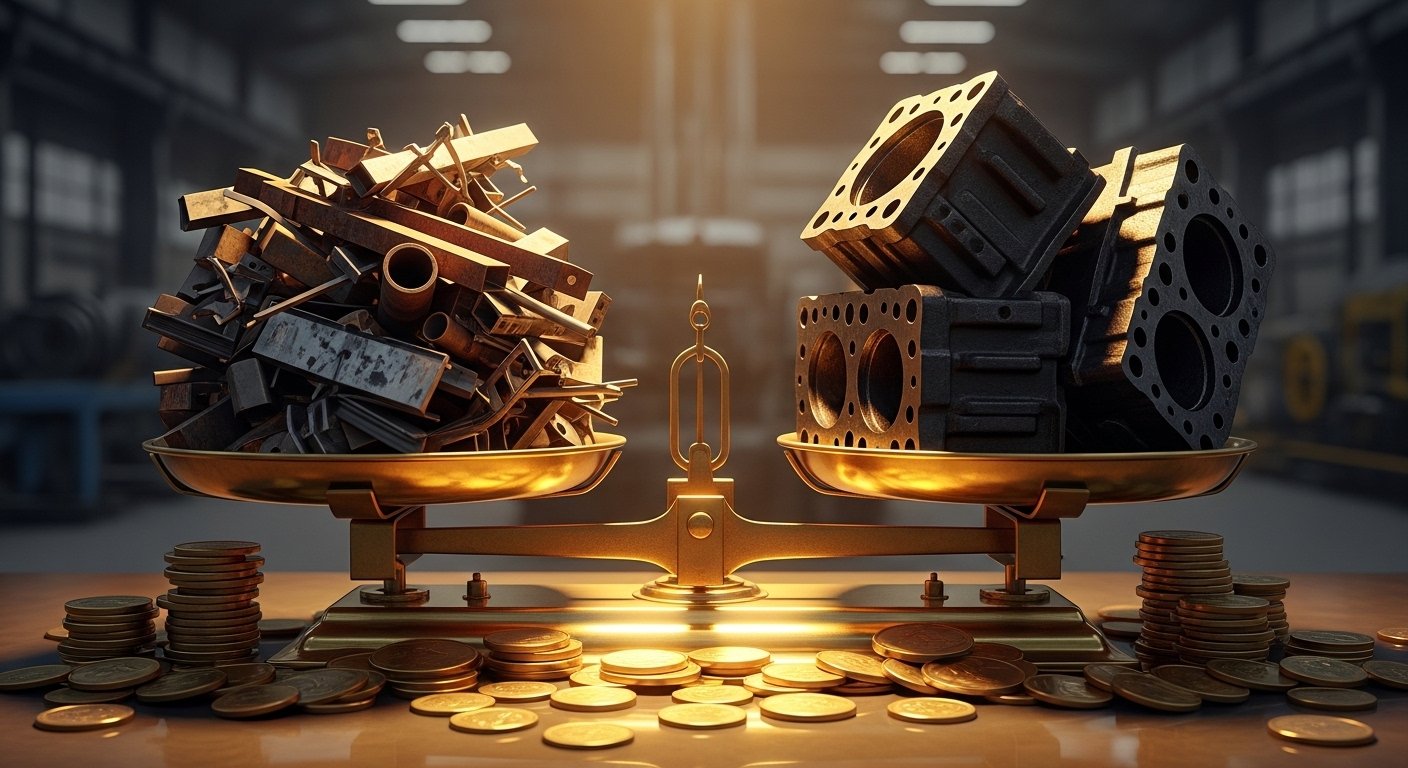
Copper is costlier than brass, and it is not close. Copper trades at ₹1,380/kg on MCX today; clean brass scrap fetches ₹850–₹950/kg at Jamnagar and Mumbai foundries. Brass is roughly 65% copper and 35% zinc, and zinc costs ₹376/kg, so every kilo of brass carries about ₹130 of cheap metal that a kilo of copper does not. Copper sits 45–60% above brass on any given day, and it always will, because brass is copper watered down.
That is the whole answer. Everything below is why it is true, how much the gap is worth when you are standing at a weighbridge, and how to make sure nobody sells you brass as copper or buys your copper as brass.
Today’s Price: Copper vs Brass Side by Side
| Metal | Exchange / board basis | Scrap buying rate (foundry, ₹/kg) | Household pickup (₹/kg) |
|---|---|---|---|
| Copper (armature, bare bright) | MCX ₹1,380 · Delhi board ₹1,404 | ₹1,250 – ₹1,380 | ₹900 – ₹1,050 |
| Copper (cable, mixed, burnt) | – | ₹1,050 – ₹1,200 | ₹750 – ₹850 |
| Brass (chadri, sheet cutting) | Derived: 65% Cu + 35% Zn | ₹920 – ₹950 | ₹650 – ₹700 |
| Brass (honey, clean) | Derived | ₹880 – ₹930 | ₹600 – ₹650 |
| Brass (bartan / utensil) | Derived | ₹850 – ₹890 | ₹550 – ₹600 |
| Zinc (for reference) | MCX ₹376 | ₹300 – ₹340 | ₹200 – ₹250 |
Rates are ex-yard, excluding 18% GST, 17 September 2026. Copper follows the Delhi metal board most closely; brass follows Jamnagar. Live brass grades are on the brass rate today page.
Read the gap in rupees, not percent. On a 500 kg lot, clean copper at ₹1,300 is ₹6.5 lakh. The same 500 kg of honey brass at ₹900 is ₹4.5 lakh. Two lakh rupees separates two metals that look alike to anyone who has not handled both.
Why Copper Costs More: The 30-Second Math
Brass has no price of its own. No exchange in India lists a brass contract. A Jamnagar foundry sets its buying board by pricing the copper and zinc inside the alloy and then knocking off a melting-loss discount. Run it yourself:
Copper leg: ₹1,380 × 0.65 = ₹897 Zinc leg: ₹376 × 0.35 = ₹131 Raw metal value of brass: ₹1,028/kg
Copper at ₹1,380 versus brass metal value at ₹1,028 is a ₹352 gap before anyone has lit a furnace. Then the furnace widens it. Zinc boils at 907°C, well under copper’s 1,085°C melting point, so a share of every brass charge leaves as fume and dross. Foundries price that loss at 8–10% for clean brass, which is how ₹1,028 of metal becomes a ₹930 buying rate.
Copper has no such problem. Pure copper melts clean, loses almost nothing, and the buyer knows exactly what comes out of the furnace. So copper scrap trades within 5–8% of the exchange price while brass trades at a 15–35% discount to copper depending on grade.
One rule covers every day of the year: copper moves ₹20, brass moves ₹13, same hour. Zinc barely matters; a ₹10 move in zinc shifts brass by ₹3.50. If a dealer tells you brass is “soft” while copper is up, he is negotiating, not reporting.
Brass vs Copper: The Difference in Plain Terms
| Copper | Brass | |
|---|---|---|
| What it is | Pure element, Cu | Alloy of copper (55–70%) and zinc (30–45%) |
| Colour | Reddish-orange, pinkish when freshly cut | Yellow to gold; redder brass has more copper, paler brass more zinc |
| Weight | 8.96 g/cm³ | 8.4–8.7 g/cm³, slightly lighter |
| Conductivity | Second only to silver; the reason it is in every wire | About 28% of copper’s; useless for power cable |
| Strength | Soft, bends easily | Harder, machines cleanly, holds threads |
| Corrosion | Forms green patina, stays sound underneath | Dezincifies in hard water and seawater unless alloyed against it |
| Where you find it | Wiring, motor windings, transformers, plumbing pipe, busbars, radiators | Taps, valves, door hardware, utensils, cartridge cases, musical instruments, gears |
| Price driver | LME and MCX copper directly | 65% copper chart, 35% zinc chart, minus melting loss |
| Scrap grades | Bare bright, armature, cable, burnt, mixed | Chadri, honey, bartan, purja, turnings |
The engineering trade-off explains the price. Copper is bought for what it conducts. Brass is bought for what it can be machined into. Nobody puts brass in a motor winding, and nobody makes a tap out of soft copper. The market pays a premium for the metal with no substitute in its main job, and copper’s main job is electricity.
Which Brass Is Closest to Copper in Price?
Red brass. The more copper in the alloy, the redder it looks and the more it fetches. Gunmetal and red brass (85% copper, with tin, lead and zinc) sit at ₹1,000–₹1,100/kg because they are three-quarters of the way to being copper. Yellow brass at 65:35 is the ₹850–₹950 material in every scrap yard. Naval brass and other high-zinc grades sit lowest.
A useful check at the yard: hold a piece of your brass against a copper pipe in daylight. If it leans orange, argue for red-brass money. If it is clearly yellow, it is standard brass and the honey or chadri rate applies. A buyer who tries to pay yellow-brass money for gunmetal valves is banking ₹150/kg on your inexperience.
Is Brass Ever Costlier Than Copper?
As raw metal, no. Not in the scrap yard, not on any exchange, not in any month of any year on record. Copper is the input; brass is copper diluted.
As a finished product, sometimes. A machined brass valve costs more per kilo than a coil of copper pipe because you are paying for the machining, not the metal. That is where the confusion starts. People price a brass tap against a copper fitting at a hardware shop and conclude brass is the pricier metal. Strip the labour out and the order reverses every time.
The same trap catches sellers. A brass door handle looks expensive. A copper motor winding looks like scrap wire. The winding is worth 50% more per kilo.
Copper vs Brass Scrap: What Sellers Get Wrong
Selling copper as brass. Old radiators, tarnished pipe, and cable with the insulation still on look dull and brown and get thrown in the brass bag. That is a ₹400–₹500/kg mistake on every kilo. Strip a section of cable, cut a fitting, and look at the fresh metal. Orange-pink is copper. Yellow is brass.
Selling brass as “mixed metal.” Kabadiwalas pay ₹500–₹650 for brass at the doorstep against ₹850–₹950 at a foundry gate. The gap is sorting labour and transport, and it is real, but it collapses once you consolidate past 100 kg of sorted material. The dealer truths guide walks through where that ₹300 goes.
Not stripping the steel. One steel bolt in a brass valve, one iron core in a copper coil, and the buyer reclassifies the lot down a grade. Copper armature with the steel laminations still on drops from ₹1,350 to ₹900. The rejection reasons guide covers what a yard is allowed to downgrade and what it is chancing.
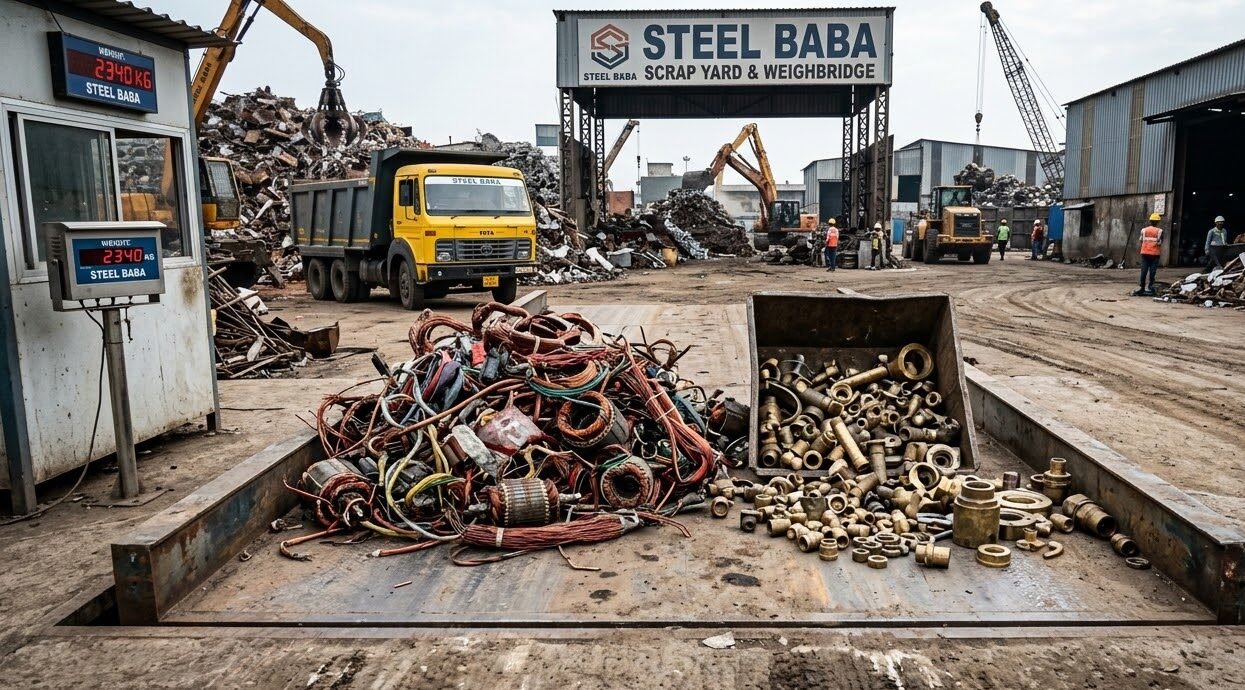
Trusting the yard’s scale. Non-ferrous is where weighbridge games cost the most, because every 10 kg “moisture deduction” on copper is ₹13,000. Insist on a certified bridge slip; weighbridge vs yard weighing explains why.
How to Tell Brass from Copper in Ten Seconds
- Cut or file it. Fresh copper is salmon-pink. Fresh brass is yellow. Surface colour lies; tarnish makes copper brown and dull brass green-grey.
- Magnet. Neither should stick. If it does, you are holding plated steel worth ₹30/kg as iron. Same test the SS scrap page uses to separate 304 from 202.
- Ring it. Drop it on concrete. Brass rings bright and long. Copper thuds.
- Bend it. Copper bends and stays bent. Brass resists, then snaps if forced.
- Weigh a known piece. Copper is 3–6% heavier than the same volume of brass. Only useful if you have a reference piece.
- Ask what it did. Wire, winding, busbar, radiator, plumbing pipe: copper. Tap, valve, handle, hinge, utensil, cartridge: brass.
For a fuller field-test routine, the purity testing guide covers ferrous and the recycling explainer covers what happens to each metal after the yard.
What Moves the Copper–Brass Gap
The gap is stable in percent and volatile in rupees. Three things widen or narrow it:
Copper alone. A copper rally lifts both metals but lifts copper by more, because brass only carries 65% of the move. Copper up ₹100 means brass up ₹65 and the gap wider by ₹35. Watch MCX copper at 10 AM and the LME cash price overnight; nothing else predicts the brass board.
Zinc. The only thing that narrows the gap is zinc rising faster than copper, and zinc at ₹376 has a long way to climb before it matters.
The rupee. India imports refined copper and concentrate. A weaker rupee raises the landed cost of virgin metal and lifts the scrap floor for both metals, copper first.
Industrial demand shifts the discounts within brass (Jamnagar sanitaryware orders, Moradabad utensil season) but does not touch the copper–brass ranking. Copper is above brass on 17 September 2026, it was above brass in 2016, and it will be above brass in 2036. The International Copper Association India and the Copper Development Association publish the alloy compositions if you want the metallurgy behind that certainty.
FAQs
Copper is costlier. On 17 September 2026 copper trades at ₹1,380/kg on MCX and clean copper scrap fetches ₹1,250–₹1,380/kg, while clean brass scrap fetches ₹850–₹950/kg. Brass is about 65% copper and 35% zinc, and zinc costs a quarter of copper, so brass is always cheaper than the copper inside it.
Brass is copper diluted with 30–45% zinc, and zinc costs ₹376/kg against copper’s ₹1,380/kg. Brass also loses zinc to fume in the furnace, so foundries apply an 8–10% melting-loss discount that pure copper never carries.
Roughly ₹350–₹500/kg at foundry level today: copper scrap at ₹1,250–₹1,380 against brass at ₹850–₹950. Red brass and gunmetal narrow that to ₹250–₹350 because they carry 80–85% copper.
Sometimes, because machining is expensive. A finished brass valve can cost more per kilo than plain copper pipe. As raw metal or scrap, copper is always the pricier of the two.
No. MCX lists copper and zinc, not brass. Traders and foundries derive brass value as (copper × 0.65) + (zinc × 0.35), then subtract melting loss. Today that gives ₹1,028/kg raw value and a ₹880–₹930 buying rate for honey brass.
File or cut a fresh surface: copper is salmon-pink, brass is yellow. Neither is magnetic. Brass rings when dropped; copper thuds. Wire, windings and pipe are copper; taps, valves, handles and utensils are brass.
Copper, by 3–6%. Copper’s density is 8.96 g/cm³; standard yellow brass sits at 8.4–8.7 g/cm³. The difference is too small to judge by hand without a reference piece.
Final Word
- Copper: ₹1,380/kg MCX, ₹1,250–₹1,380 scrap. Priced directly off the exchange, loses almost nothing in the furnace, no substitute in wiring.
- Brass: ₹850–₹950/kg scrap. Priced as 65% copper plus 35% zinc minus an 8–10% melting loss. Red brass and gunmetal sit higher, high-zinc grades lower.
- The gap: ₹350–₹500/kg, forever. It widens when copper rallies and narrows only if zinc outruns copper, which it does not.
Sort your copper out of your brass before the truck goes on the bridge. On a mixed 500 kg non-ferrous lot, that sorting is the difference between ₹4.5 lakh and ₹6.5 lakh, and no negotiation recovers it afterwards.
Get Your Exact Quote – Here’s What To Send
Copper and brass quotes move with MCX by the hour. To get a firm number:
- Approximate weight – kg or number of bags.
- Which metal and grade – copper armature, cable, bare bright; or brass chadri, honey, bartan. A photo of a freshly cut surface settles most arguments.
- Your pickup location – Mumbai, Pune, Jalna, Mangaon or wherever the material sits.
Send these three on WhatsApp and you get a binding rate per grade, a certified weighbridge slip and a GST invoice.
Sell your scrap · WhatsApp us · +91 70201 82128 · Scrap dealers in Mumbai · GST on scrap sales
Scrap rates on this page are indicative market references compiled from MCX, the Delhi metal board and Steel Baba’s yard survey, and are not offers to buy or sell. All rates exclude 18% GST and change daily. Confirm with a verified buyer before finalising any transaction.