Scrap Metal Recycling Explained
Every kilo of scrap that goes back into a furnace instead of a landfill is a kilo of virgin ore that never had to be mined. Here is how that actually happens, why it matters, and what the numbers really are.
~95%
ENERGY SAVED – ALUMINIUM
~85%
ENERGY SAVED – COPPER
60–74%
ENERGY SAVED – STEEL
45%
INDIA’S SCRAP-STEEL TARGET BY 2030
Somewhere in India this morning, a demolition crew pulled steel beams out of a building that’s coming down, a workshop swept up a bin of aluminium turnings, and a household handed an old cooking pot to a passing kabadiwala. None of that material is waste. It is raw material for tomorrow’s steel, tomorrow’s wiring, tomorrow’s cookware – and whether it actually gets there, instead of sitting in a landfill for a few hundred years, depends entirely on what happens to it next. That is what scrap metal recycling is: the process of recovering discarded metal and putting it back into productive use, through collection, sorting, and melting, rather than mining fresh ore to do the same job all over again.
This is not a small or marginal industry. India’s metal recycling sector processes millions of tonnes of material a year, and large industrial processors are a big part of why it works at scale. CMR Green Technologies Ltd., for instance, operates a dozen sorting and processing facilities across the country handling several hundred thousand tonnes of scrap annually, feeding aluminium and zinc alloy back into the automotive and manufacturing supply chain. That single company’s daily throughput is a good illustration of a simple fact: recycling metal isn’t a niche environmental gesture anymore. It is core industrial infrastructure, and it exists because it is genuinely cheaper, faster and cleaner than starting from ore every time.
What Is Scrap Metal Recycling?
Strip away the industrial language and the idea is simple. Metal is one of the very few materials that can be melted down and reformed without losing its core properties – steel stays steel, copper stays copper, no matter how many times it goes through the cycle. That single fact is why recycling metal is fundamentally different from recycling most other materials, and why it matters so much to get it right: every tonne that is properly recovered is a tonne that never needs to be dug out of the ground again.
Recycling in this context means exactly four things happening in sequence: discarded metal is collected from wherever it accumulates, it is sorted into the right categories, it is processed down to a manageable form, and it is melted and reformed into something a manufacturer can actually use. Skip or botch any one of those steps and the material either ends up in a landfill anyway, or it comes out of the furnace as a lower-grade, less valuable alloy than it should have been. The rest of this page walks through each stage properly.
Types of Scrap Metal
Every piece of scrap metal falls into one of two families, and the distinction is not academic – it decides who buys it, what it’s worth, and what it becomes next. The simplest test in the world separates them: hold a magnet up to it.
🧲 MAGNETIC
Ferrous Metals
Contain iron, which makes them respond to a magnet – the fastest field test there is. This family covers steel, iron and cast iron, and by sheer weight it is the largest category of scrap in the world: structural beams, vehicle bodies, pipes, machinery, rebar, and the enormous volume of demolition and construction waste that comes out of any growing city. Ferrous scrap is lower value per kilo than non-ferrous, but the volumes are so large that it remains the backbone of the recycling industry.
🔩 NON-MAGNETIC
Non-Ferrous Metals
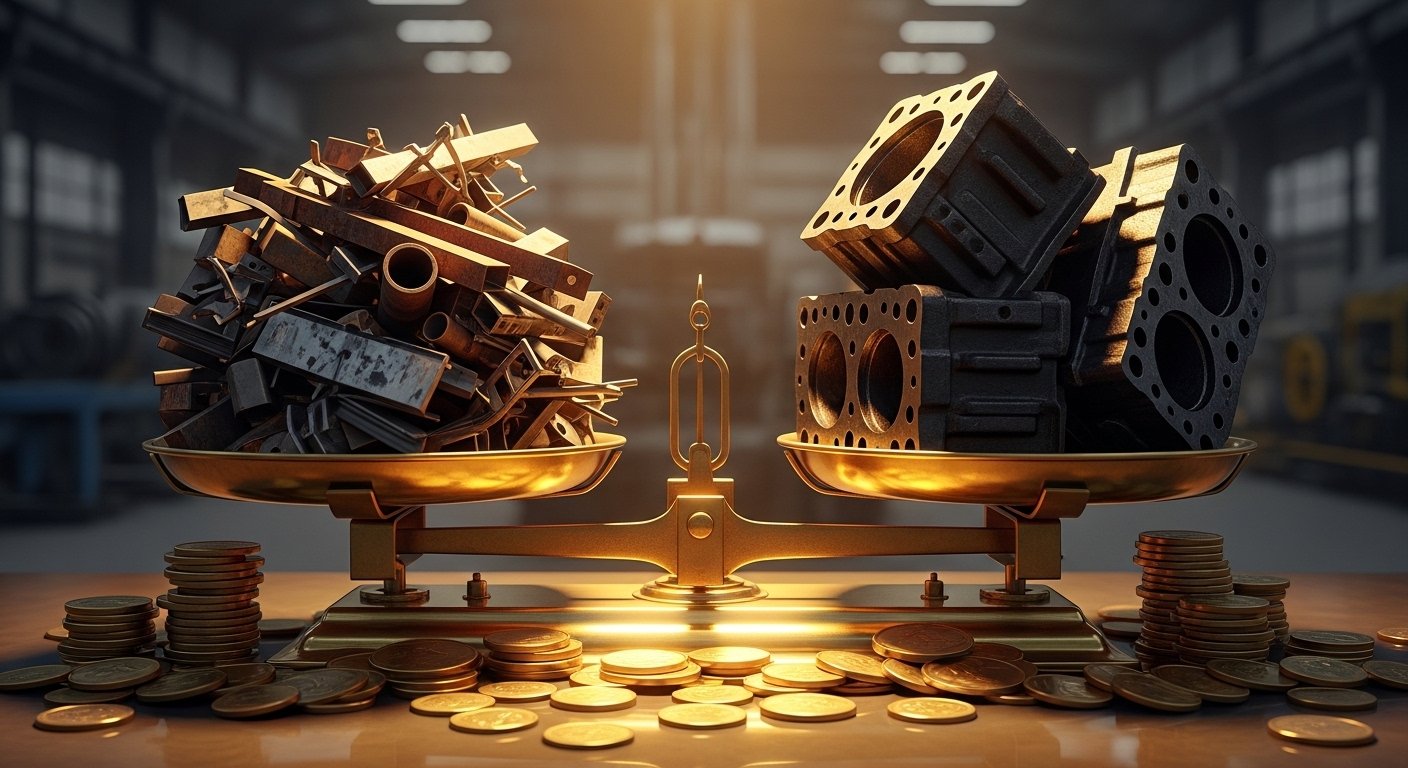
Contain no iron, so a magnet does nothing. This family includes copper, aluminium, brass and bronze, along with zinc, lead and nickel. Weight for weight, these are the high-value materials in the scrap trade – clean copper wire is worth roughly forty times what mixed iron fetches per kilo. They come from electrical wiring, plumbing, vehicle radiators, window frames, and industrial machinery, and because they are worth so much more, they are also where careless sorting costs sellers the most money.
Why this matters: non-ferrous metal mixed into a ferrous load doesn’t just lose its own value – a buyer who spots contamination will discount the entire lot, because it signals the whole pile wasn’t sorted carefully. A five-minute magnet check before you sell can be worth more per hour than almost anything else you do that day.
The Recycling Process, Step by Step
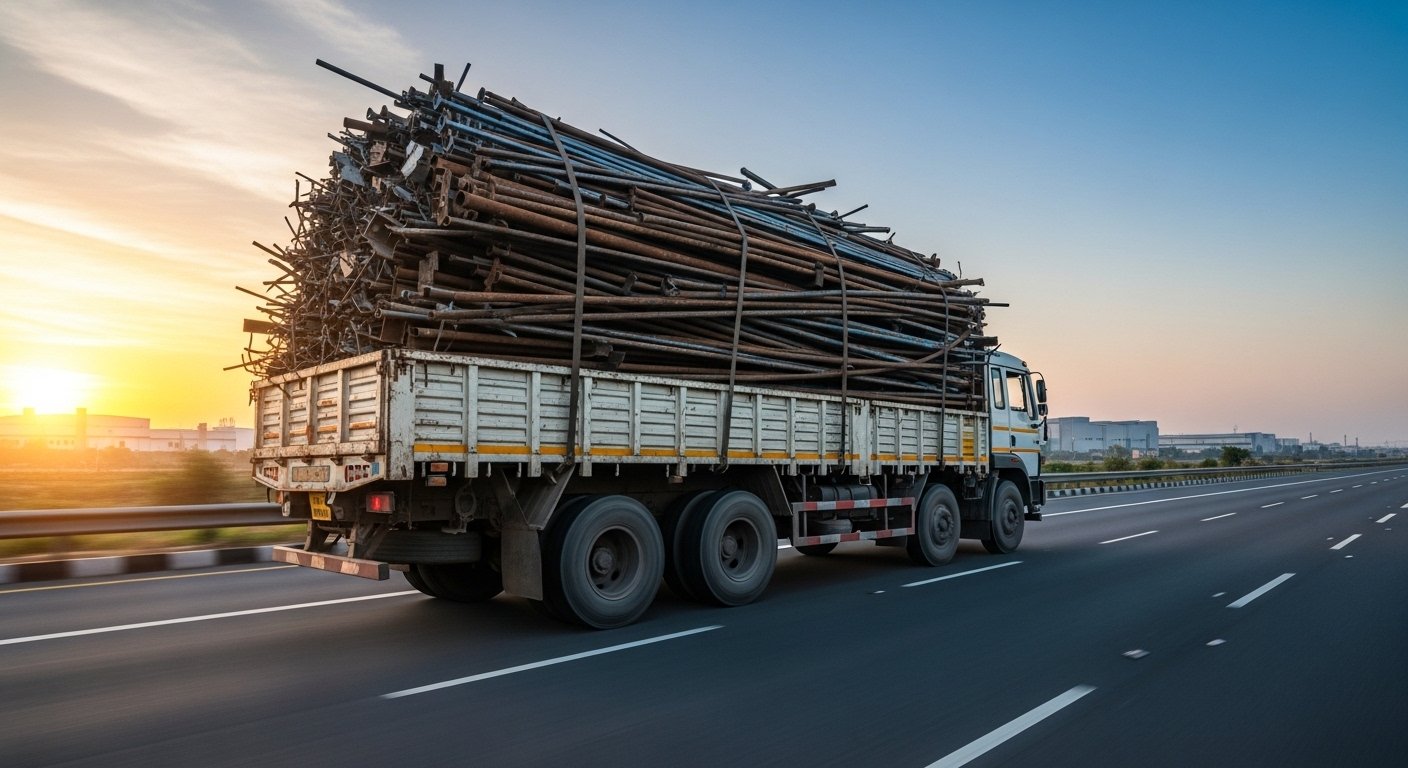
From a rusted pipe in a scrapyard to a fresh steel beam in a construction site, the same five stages happen every single time, whether the operation is a neighbourhood yard or an industrial plant processing hundreds of thousands of tonnes a year.
Collection
Metal waste is gathered from households, industrial sites, workshops, vehicle scrapping, and decommissioned structures. This is the least glamorous stage and the most essential – nothing further can happen to material that never leaves the source.
Sorting
Collected scrap is separated by type using magnets to split ferrous from non-ferrous, visual inspection for grade and condition, and increasingly, sensor-based sorting systems – eddy current separators for aluminium, colour sorters, induction-based systems – that can process high volumes with a precision no human eye can consistently match.
Processing
Large or awkward pieces are compressed, shredded, or cut down into consistent, manageable sizes. A car body, a length of structural steel, or a tangle of wiring all need to come down to a size and shape a furnace can actually charge efficiently.
Melting
Sorted, sized scrap is heated in a furnace until it turns liquid. Different metals melt at very different temperatures – aluminium at roughly 660°C, steel above 1,370°C – and the heat also burns off coatings, paint, and other contamination the material picked up during its first life.
Purification & Solidification
The molten metal is refined to remove remaining impurities, then cast into standard solid shapes – bars, billets, ingots – that a manufacturer can pick up and feed directly into making something new. This is the point where scrap officially stops being scrap.
What makes this cycle remarkable is that it has no defined end point. A steel beam recycled today can be melted down and recycled again in twenty years, and again after that, essentially without limit and without meaningful loss of quality. Aluminium is often cited as the clearest example: it’s estimated that roughly 75% of all the aluminium ever produced is still in circulation somewhere, because the metal simply doesn’t degrade through the recycling process the way many other materials do.
Energy Savings: Recycled vs Virgin Metal
This is the single most important number in the entire case for metal recycling, and it’s worth sitting with for a moment. Producing metal from ore is not just a matter of digging it up – it means crushing rock, chemically extracting the metal, and then smelting it at extreme temperatures, every step consuming enormous amounts of energy. Recycling skips almost the entire chain. The scrap is already refined metal; all that’s needed is to melt it and clean it up.
← Swipe the table sideways to see all columns →
| Metal | Energy saved vs virgin ore | What that looks like in practice |
|---|---|---|
| Aluminium | Up to ~95% | Recycling one aluminium can saves roughly enough energy to run a laptop for several hours |
| Copper | ~85% (some estimates higher) | Recovering copper from scrap uses a fraction of the energy of mining and smelting fresh ore |
| Steel | ~60–74% | Every tonne of recycled steel also saves over a tonne of iron ore and hundreds of kilos of coal and limestone that never need to be mined |
Aluminium’s number is the one that tends to stop people. Extracting aluminium from bauxite ore requires an electrolytic process so energy-hungry that primary aluminium production is sometimes called “solid electricity.” Recycling sidesteps almost all of it – remelting scrap aluminium takes roughly a twentieth of the energy of making the same metal from ore. That is not a rounding error. It is the difference between an energy-intensive industrial process and a comparatively simple one.
Environmental Impact, Beyond the Energy Bill
Energy savings are the headline figure, but they are really a proxy for something bigger: every stage of skipped ore extraction is a stage of avoided environmental damage. Mining virgin metal ore disturbs land, consumes vast quantities of water, and generates waste rock and tailings that have to go somewhere. Smelting it releases greenhouse gases and, depending on the process, other air pollutants. Recycling doesn’t eliminate every impact of working with metal – melting scrap still takes energy and still needs to be done responsibly – but it removes almost the entire front half of that chain.
🌍 Lower emissions
Widely-cited industry estimates put CO₂ reductions from using recycled feedstock at roughly 90% for aluminium, 55–65% for copper, and around 58% for steel, compared with primary production of the same metal.
🗑️ Less landfill
Unlike most household waste, metal doesn’t decompose – a discarded iron beam or aluminium frame will sit in a landfill essentially forever unless it’s recovered. Every tonne diverted is landfill space and long-term contamination risk avoided permanently, not just delayed.
💧 Conserved resources
Every tonne of recycled steel is commonly estimated to save more than a tonne of iron ore, alongside hundreds of kilograms of coal and limestone, plus the water that virgin ore processing would otherwise consume.
What this means in practice: the environmental case for recycling metal isn’t a matter of opinion or good intentions – it’s a direct, measurable substitution. Every tonne of scrap that reaches a furnace is a tonne of ore that stays in the ground, water that stays in the water table, and emissions that never happen. That is why metal recycling sits near the top of almost every serious list of practical, scalable climate actions.
Recycling at Scale in India
India’s metal recycling sector has grown from an informal, kabadiwala-driven trade into a genuine industrial ecosystem worth billions of dollars, and government policy is actively pushing it further. Under the National Steel Policy, India has set a target of lifting the share of steel produced from recycled scrap from roughly a quarter today to 45% by 2030 – a target that only gets hit if the collection and sorting infrastructure behind it keeps expanding.
Large processors are the backbone of that infrastructure. CMR Green Technologies Ltd. – India’s largest non-ferrous scrap recycler, operating a dozen facilities nationwide and processing several hundred thousand tonnes of metal a year – is a useful example of what industrial-scale recycling actually looks like: automated sorting lines, induction-based separation, dedicated furnace capacity, and direct supply relationships with automakers and manufacturers who need a steady, high-quality stream of recycled aluminium and zinc alloy. Companies operating at that scale exist because the economics of recycling work, not despite them.
But scale at the top of the industry depends entirely on volume at the bottom of it. Every tonne a large processor melts down first passed through a much longer, much less visible chain – a household, a workshop, a local kabadiwala, a yard, a trader – and if that chain breaks anywhere, the material never reaches a furnace at all. This is exactly why sorting and honest grading matter as much at the level of one person clearing a garage as they do at an industrial plant processing a thousand tonnes a week. The system only works end to end.
How You Can Help, Practically
None of this requires heroics. The recycling system depends on ordinary, repeatable decisions made correctly at the point where scrap first changes hands – and most of them cost nothing but a few minutes.
- Never bin metal with general waste. Once it’s in a landfill, the odds of it ever being recovered drop close to zero. Metal doesn’t decompose, so a discarded item can sit there for centuries doing nothing but taking up space.
- Separate before you hand it over. Five minutes with a magnet, splitting ferrous from non-ferrous, protects the value of everything in the pile and makes the buyer’s job – and by extension the recycling process – genuinely more efficient.
- Keep it dry and free of attachments. Rubber, plastic, wood and moisture all reduce melt efficiency and can lower what a buyer is willing to pay, which in turn affects whether it’s economical to recycle at all.
- Sell to someone who will actually recycle it. Whether that’s a local kabadiwala for a small household clearance or a direct buyer for a larger quantity, the material needs to reach someone in the recycling chain – not sit in storage indefinitely.
Scale matters too, but not in the way people assume. A single household clearing out a garage isn’t going to move the needle on India’s 45% scrap-steel target on its own. But multiply that decision by millions of households, workshops and small businesses making the same correct call, week after week, and it adds up to exactly the volume the large processors need to keep running at capacity. The industrial end of this chain cannot function without the informal end doing its job properly first.
Scrap Metal Recycling FAQs
Scrap metal recycling is the process of recovering discarded metal and returning it to productive use instead of landfill, through four stages: collection from households, industrial sites and demolition, sorting into ferrous and non-ferrous categories, processing to reduce it to a manageable size, and melting and reforming it into usable material such as bars, billets or ingots. Because metal can be melted and reformed repeatedly without losing its core properties, it is one of the most efficiently recyclable materials that exists.
Ferrous metals contain iron and are magnetic – this includes steel, iron and cast iron, and by weight they make up the largest share of scrap generated worldwide, mostly from construction, demolition and vehicles. Non-ferrous metals contain no iron and are not magnetic, including copper, aluminium, brass and bronze. Non-ferrous scrap is generally far more valuable per kilo than ferrous scrap, which is why keeping the two separated matters so much – a magnet is the simplest way to tell them apart before you sell.
It depends on the metal, but the savings are large across the board. Recycling aluminium uses up to roughly 95% less energy than producing it from bauxite ore. Copper recycling saves around 85% of the energy needed for primary extraction. Steel recycling saves roughly 60 to 74% of the energy required to make steel from iron ore. These figures are widely cited across independent industry sources and reflect how much of the energy-intensive mining and smelting process recycling simply skips.
Because it displaces virgin ore mining and smelting almost entirely, which is where most of the environmental cost of using metal actually occurs. Mining disturbs land and consumes large volumes of water; smelting from ore is energy-intensive and emissions-heavy. Recycled feedstock is commonly estimated to cut CO₂ emissions by around 90% for aluminium, 55–65% for copper and roughly 58% for steel compared with primary production. Metal also does not decompose, so recovering it keeps it out of landfill permanently rather than delaying the problem.
India’s metal recycling sector has grown into a multi-billion-dollar industry supporting well over a million jobs, and it is central to national policy. Under the National Steel Policy, India aims to raise the share of steel made from recycled scrap from roughly 25% today to 45% by 2030. Large industrial processors such as CMR Green Technologies Ltd., which operates a dozen sorting and processing facilities nationwide, work alongside a vast informal network of local kabadiwalas, traders and yards that collect and pre-sort material before it reaches an industrial furnace.
Segregate before you sell – keep ferrous and non-ferrous metals in separate piles, since a mixed load either gets discounted or has valuable material lost inside a lower-grade sort. Keep material dry and free of attached non-metal parts like rubber, plastic or wood, since contamination reduces melt efficiency. Sell to a buyer who can verify weight and grade properly, whether that is a local kabadiwala for a small household lot or a direct buyer for a larger quantity. The single biggest thing an individual can do is simply make sure scrap metal is handed to someone who will recycle it, rather than left to end up in general waste.
♻️ PUT THIS INTO PRACTICE
Got scrap sitting around? Make sure it actually gets recycled.
If you’re clearing out a workshop, a demolition site, or a garage full of old metal, sort it the way this page describes and check today’s rates before you sell – that way you know your material is going where it should, at a fair price. For current ferrous and non-ferrous rates by city and grade, see our Iron Scrap Rate Today page, or send us your quantity and location directly.
Energy-saving and emissions figures on this page are widely-cited industry ranges, cross-checked across multiple independent sources, current as of September 2026. Exact savings vary by process, technology and region. Company details are based on publicly available information at time of writing.